Emotional Eating: How to Regain Control?
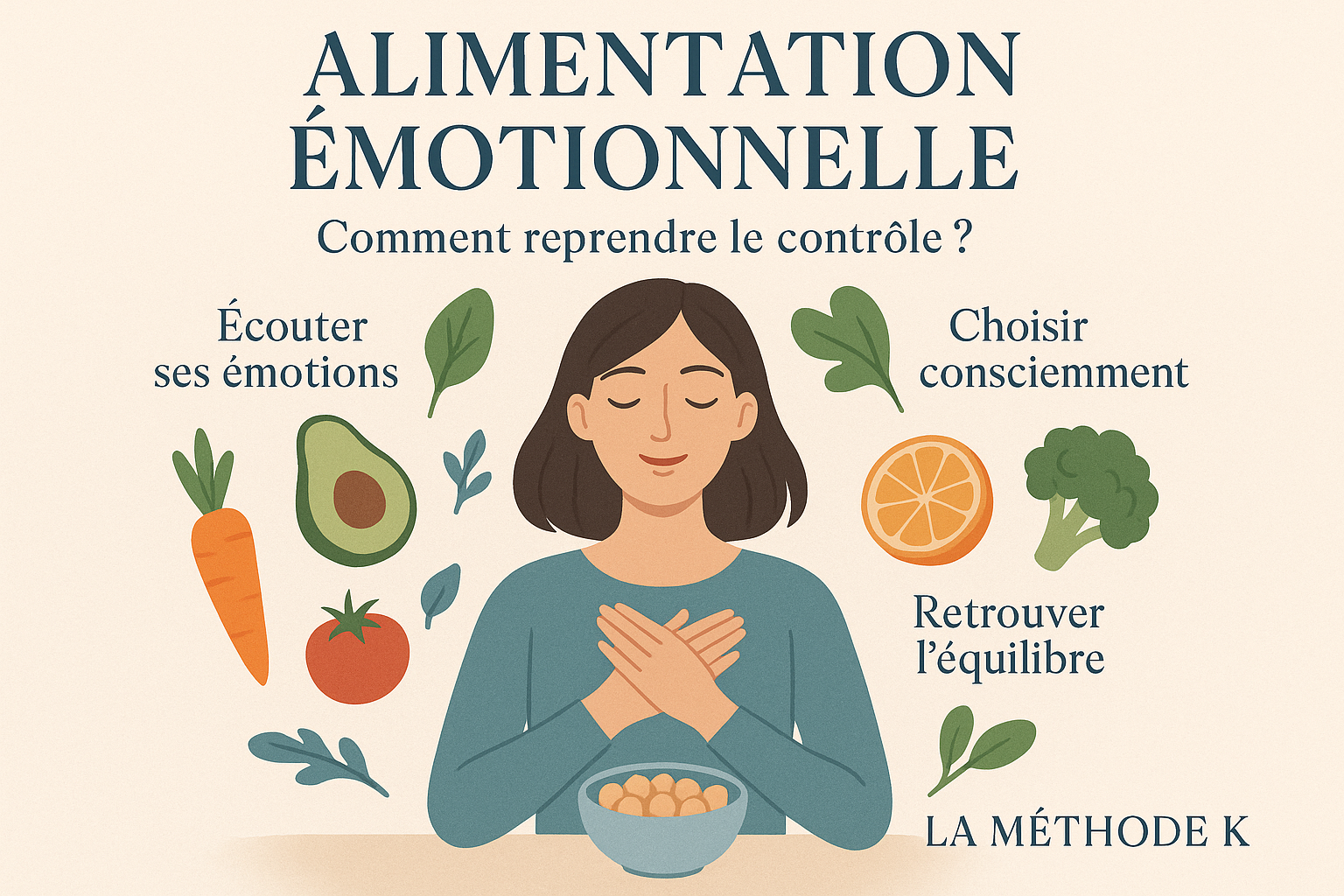
Do you ever eat when you're not hungry, just to fill a void or manage an emotion? This is called emotional eating.
This behavior is very common, but it can sabotage your weight loss efforts. Let's explore its mechanisms and how to break free from it.
⸻
What is emotional eating?
• Definition: eating to respond to an emotion (stress, sadness, boredom, anger, joy) rather than a physical need.
• Examples: snacking on chocolate after an argument, finishing a bag of chips in front of Netflix out of boredom.
⸻
Why do we eat our emotions?
1. Immediate relief: food stimulates dopamine, the pleasure hormone.
2. Conditioned habit: associating an emotion with a food from childhood.
3. Lack of emotional tools: not knowing how to manage stress or fatigue otherwise.
⸻
The consequences of emotional eating
• Weight gain (calories consumed without real need).
• Guilt and frustration after eating.
• Food addiction to certain products (sweet/salty).
⸻
How to break free from emotional eating
1. Identify your triggers
• Keep an emotional eating journal: when, why, what emotion, what food?
2. Replace with other strategies
• Stress → deep breathing, meditation, walking.
• Boredom → creative activity, calling a loved one.
• Sadness → writing down your emotions, listening to music.
3. Eat mindfully
• Before eating, ask yourself: Am I really physically hungry?
• Note the difference between physiological hunger and emotional hunger.
4. Get support
Coaching with an expert in nutrition and emotional management can help you learn to decode your habits and rebuild a healthy relationship with food.
⸻
Emotional eating is not inevitable. With the right tools, you can regain food freedom and achieve your weight loss goals. If you would like support in this process, Method K offers personalized coaching to deeply transform your habits.